Two people can both be told they have a liver problem and leave with very different plans. The cause, the amount of scarring, other illnesses, and medicines you already take all change the options.
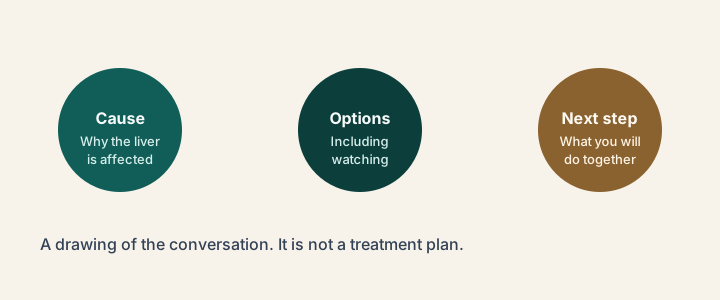
The cause comes first
Plans differ for viral hepatitis, alcohol-related liver disease, MASLD, autoimmune liver disease, bile-duct disease, and inherited conditions. Sometimes more than one factor is present. Treating the cause, when a treatment exists, is different from treating only a blood-test number.
Hepatitis B and hepatitis C are examples where clinicians may discuss antiviral treatment. Whether treatment is offered, and how it is covered, depends on your results and on your province. Ask your own clinician. CATIE describes these infections for the public.
Kinds of care
Care might include watching and repeating tests, changes to alcohol or metabolic health, prescribed medicines, procedures, or referral to a transplant program. Watching is a real plan when the expected benefit of acting now is low. It should still come with a clear follow-up date.
Ask what success would look like, what the side effects are, and what happens if you wait. Also ask what is urgent and what can wait until the next visit.
Follow-up for more advanced disease
If a clinician says there is cirrhosis, or advanced scarring, follow-up is often more structured. It may include checks for complications and regular imaging. The interval is a clinical decision. Do not copy a schedule from another person’s story.
New confusion, vomiting blood, black stools, or a suddenly tense abdomen are emergencies. Call 911.
Shared decisions
You can ask for an interpreter, a family member on the phone, or a written summary. You can also ask which decisions are yours to make and which ones are safety requirements, such as stopping a medicine that is harming the liver. A good visit ends with the next step, who arranges it, and how to ask questions later.