Many liver conditions cause few symptoms at first. People are often checked because a blood test came back unexpected, because of another condition such as type 2 diabetes, or because of a risk such as hepatitis B, hepatitis C, or a long period of heavy alcohol use.
This page lists reasons to have a conversation. It cannot tell you if your liver is healthy.
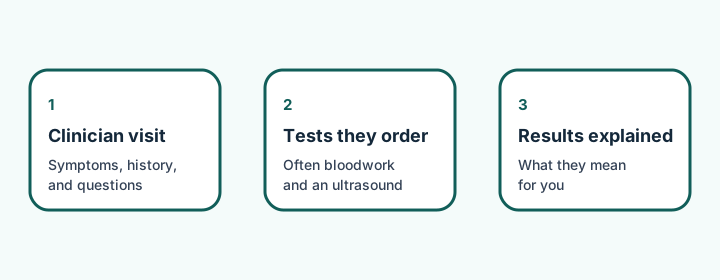
Why people get checked
A clinician may suggest liver blood tests or imaging when there is a reason to look, for example:
- A past or possible hepatitis B or hepatitis C infection
- Heavy alcohol use, now or in the past
- Metabolic conditions such as type 2 diabetes, obesity, high blood pressure, or high cholesterol
- A family history of liver disease
- Medicines, supplements, or herbal products that need a closer look
- Swelling of the abdomen or legs, easy bruising, dark urine, or pale stools
Testing for hepatitis B and C is available across Canada. You can ask for confidential testing. CATIE explains viral hepatitis in more detail, and the Canadian Liver Foundation has public guides.
Symptoms that should be assessed
Tell a clinician about yellowing of the skin or eyes, itching that is new and unexplained, ongoing pain in the upper right abdomen, or a belly that is getting larger. Also mention confusion, a new sleep pattern, or bleeding that seems unusual.
Some of these symptoms have causes that are not the liver. That is why they need a person who can examine you and order the right tests.
Get help the same day or now
Call 911 if you are vomiting blood, passing black or bloody stools, have chest pain or trouble breathing, or someone is confused and hard to wake. New jaundice with feeling very unwell also needs prompt care. If you are unsure and it is not an emergency, call 811 in most provinces and territories.
What you can bring to an appointment
Write down your questions, your medicines, and anything you take that was not prescribed, including pain pills, teas, and supplements. Bring previous lab results if you have them. Ask what the next step is if the first tests are not clear.